Colorful houses with narrow facades, the Motława River, and – of course – a vast array of excellent eateries make Gdańsk’s Old Town memorable. Let’s take a walk through the Old Town streets and along the riverbank, and head to the seaside as well. We’ll enjoy candlelight piano concerts and view exotic butterflies, taking photos by day and night.
The colors and patterns of Gdańsk
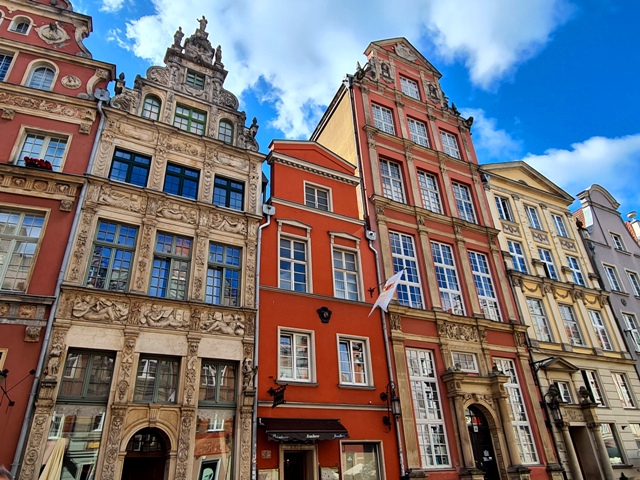
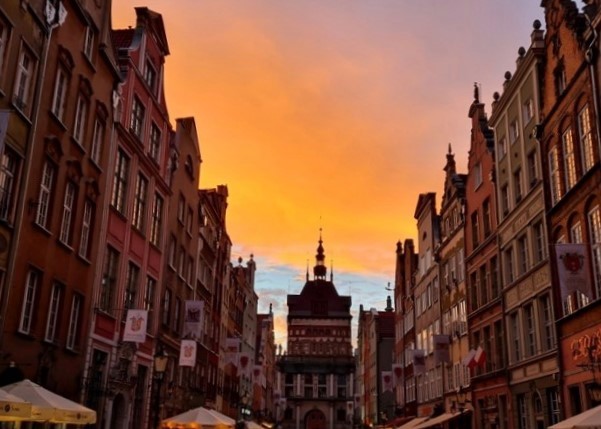
As soon as you arrive in Gdańsk’s Old Town, the first beautiful house catches your eye. Then a second, and then a third – even more stunning than the last. You begin to notice colorful facades, carved doorways, turrets, and narrow streets. And before you know it, you’ve been standing in front of a single house for minutes, snapping photos. Then comes the next street, the next intriguing building, and your stroll turns into a journey of architectural discovery.
The houses in Gdańsk’s Old Town aren’t content with simply being houses. They aspire to be something more. One boasts grander ornamentation, another a lovelier color; a third features a narrower, taller facade, while a fourth sports unique architectural details.
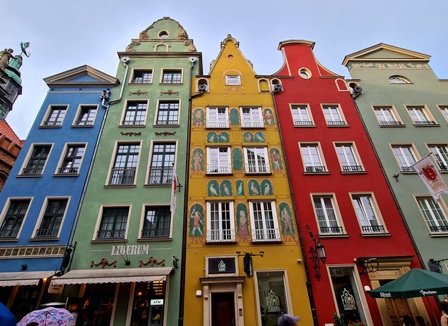
The houses in Gdańsk, packed tightly side by side, reminded me of a box of colored pencils. It was as if the Old Town had decided that gray simply wouldn’t do, and I felt a pang of regret that the city of Tartu hadn’t hit upon the same idea. These tall, narrow houses apparently came about because, in the past, houses were taxed based on their street-facing width – a facade tax, so to speak. There isn’t anything like this in Estonia yet, is there?
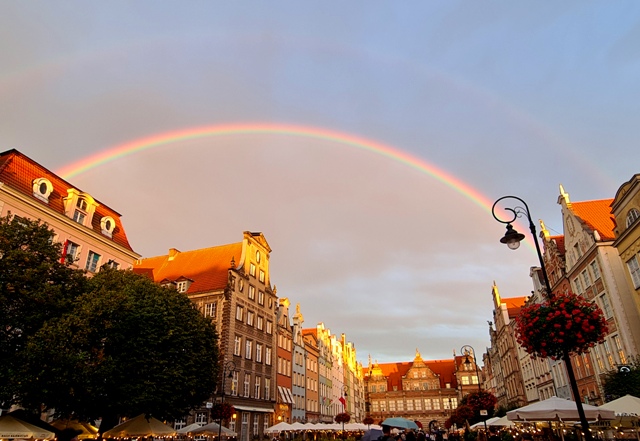
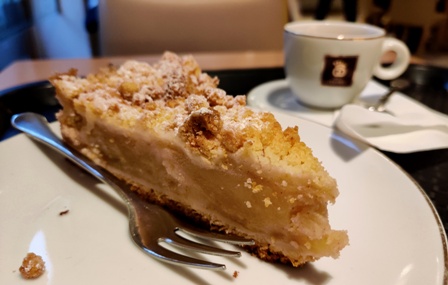
Walking through Gdańsk’s Old Town felt like stepping into an old-fashioned painting. The scene was made even more beautiful by a rainbow arching over the rooftops – a sight that appeared while I had taken shelter from the rain in a café, enjoying yet another slice of apple cake.
The Royal Route and Neptune
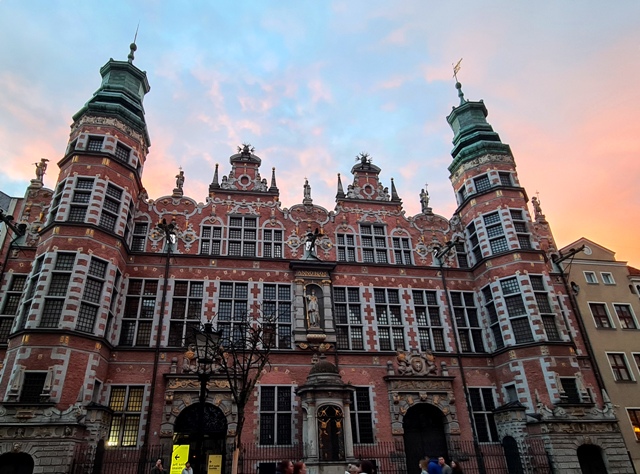
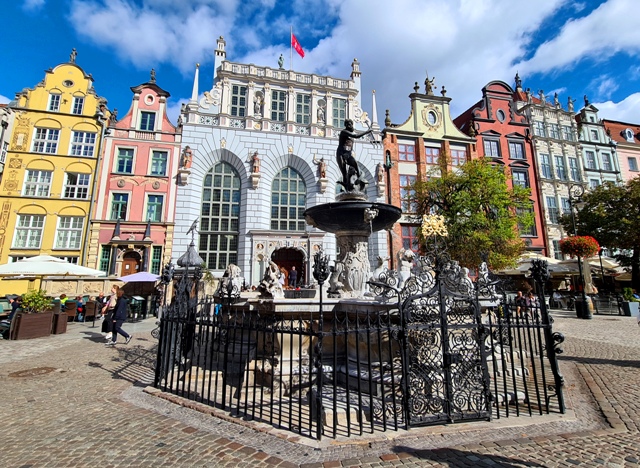
The most famous street in the Old Town is undoubtedly Ulica Długa (Long Street) and its continuation, Długi Targ (Long Market). The Royal Route runs through the city’s historic heart, lined with some of Gdańsk’s most magnificent buildings. Polish kings once made their ceremonial entry into the city along this path. Długi Targ also serves as the city’s main square, home to several of Gdańsk’s most famous landmarks, such as the Town Hall, Artus Court, and the Neptune Fountain. One can read in Neptune’s expression that he has been watching it all for a very long time – the rain, the sunshine, and the tourists snapping selfies. Neptune knows that Gdańsk’s history is inextricably linked to the sea, the port, and trade.
You might also enjoy a leisurely stroll along the cobblestone Mariacka Street. This street connects the imposing St. Mary’s Church – a vast and impressive brick structure – with St. Mary’s Gate by the Motława River. Distinctive features of the street include the terraces, stone staircases, and rain gutters in front of the houses, as well as the many amber shops. Gdańsk and amber are virtually inseparable, as both share a deep connection to the sea.
The Motława River, which casts reflections of the city
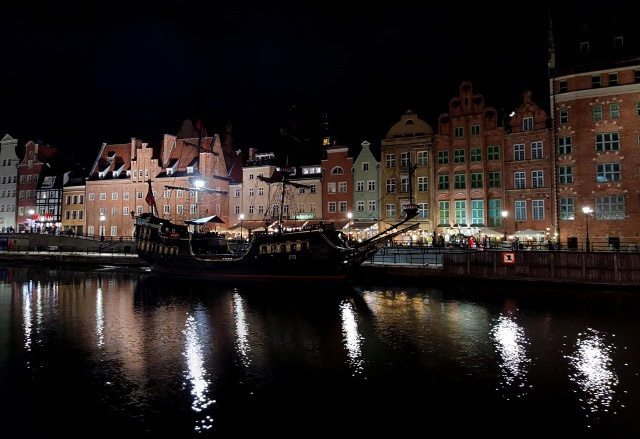
The heart of Gdańsk is defined by more than just its streets and houses. The city is inextricably linked to the water. Along the banks of the Motława River, the city’s rhythm shifts. Here, you can stroll along the waterfront, admire the boats and ships, sit in a restaurant, or simply watch the passersby. Street musicians add a touch of romance to the evening bustle. Gdańsk’s Old Town is also a delight in the evening, when the light reflects off the river and the restaurants and fountains are beautifully illuminated. A chance to walk slowly and let the romantic atmosphere wash over you…
Gdańsk has another side
Gdańsk has another, far more serious layer. One moment you are standing amidst colorful houses, admiring the architecture and eating cake. The next, you realize that this city has witnessed far more than its beautiful facades suggest. Gdańsk is a city of wars, destruction, and reconstruction. It suffered heavy damage during World War II, and much of the historic center had to be rebuilt later. Consequently, the Gdańsk of today is simultaneously old and new – a blend of memory and modernity, history and living reality.
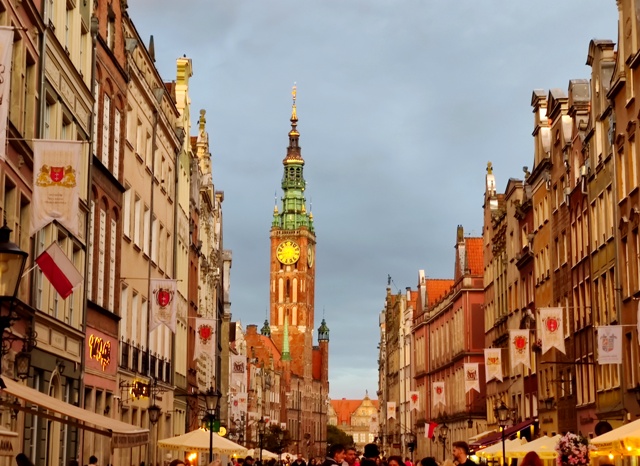
Beautiful buildings and streets teeming with tourists are merely one layer. Beneath them lie stories of the people who lived, worked, fought, suffered loss, and started over here. Gdańsk does not let you simply pass through; it compels you to look, listen, take photos, and – without a doubt – have something to eat. Perhaps it even keeps a tally of how often you found yourself thinking: Oh, how beautiful!
A huge selection for food lovers
No travel story is truly complete without mentioning the food, as I travel largely for the sake of dining. Honestly, culinary experiences – whether pleasant or unpleasant – stay with me for a long time and shape the character of the trip. That is why I think eateries ought to consider treating customers politely; after all, a visitor might just come back. And even if someone looks like an ordinary, solitary, and slightly weary individual, they might still run a blog with a readership. In Gdańsk, I had no complaints whatsoever, and finding an answer to the question Where should I eat? was certainly not difficult in that city.
There were places to eat at every turn in the Old Town, and these cozy, beautifully decorated spots were filled with groups of people chatting and laughing. Poland is a fantastic destination for culinary tourism and, in my opinion, one of Estonians’ favorite foodie countries – second only to Latvia. To be honest, I was overeating. The attitude towards food simply seemed so healthy and positive. A quick example: I was buying two apple pies when the salesperson said she was throwing in a third one for free – one that would have otherwise been left sitting alone on the counter. A gift. Coming from Estonia, experiencing such a cheerful attitude was a refreshing change of pace. Food in Poland is hearty and delicious; there is a wide selection, and – naturally – it is more affordable than in Estonia. Once again, the people were remarkably polite and cleanliness-conscious.
Evening candlelit piano concerts
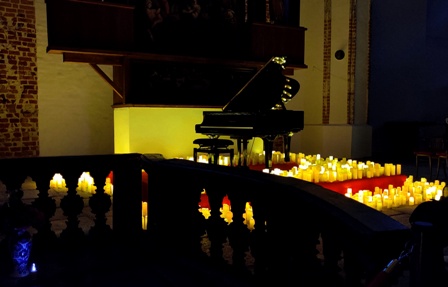
I also really enjoyed the evening piano concerts; I discovered them while walking around the city and bought the tickets via GetYourGuide. Chopin recitals were taking place at several venues, but I chose a concert held in a church, illuminated by candlelight. The performer was a charming young Polish man whose playing was truly delightful.
Another concert that touched my soul featured Queen’s music arranged for the piano. Once again, the piano was surrounded by countless candles, a dimly lit and cozy concert hall, and virtuosic musicality. Throughout the performance, interesting background information was shared about the songs, the band Queen, and Freddie himself. The event was organized by two charming young men, and when I bought a themed T-shirt from them, one of them mentioned that he had personally ironed it. I love souvenirs that come with a story. The lively, harmonious music, combined with the candlelight and the stories, left me captivated for the entire evening.
Exotic butterflies in Gdańsk
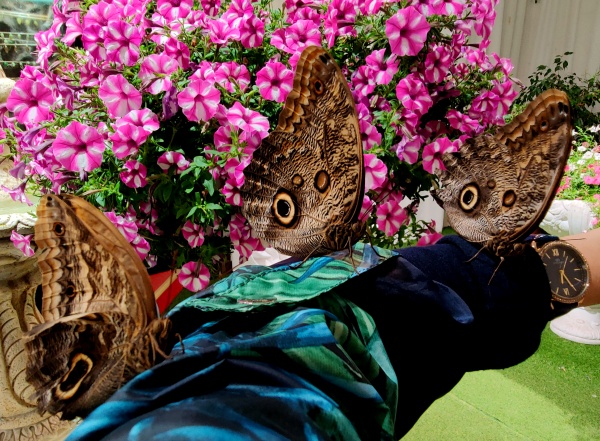
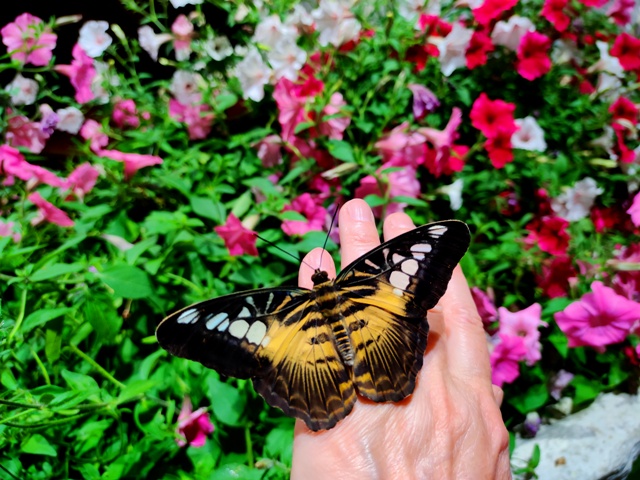
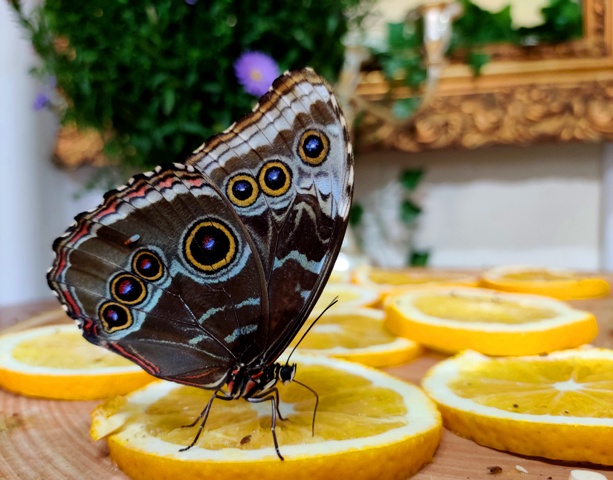
In Gdańsk’s Old Town, I came across a building called the Butterfly Museum. I have written in my book about the time a butterfly kissed me at a spring, and it seems I share a special bond with butterflies. This time, three large, brown, exotic butterflies clung to my hand; I was able to look them in the eye for a while before guiding them toward some orange slices. Those three were definitely phlegmatic characters. Their feet were very rough and had a powerful grip. For an animal lover like me, interacting with butterflies is a delightful experience.
Some rings can be very showy and magnificent.
And what a butterfly restaurant it is.
Why is Gdańsk so popular among Estonians?
Wizz Air currently brings a large number of Estonians from Tallinn to Gdańsk every week on low-cost flights, so their presence in the city is impossible to miss or not hear.
For practical information, getting from the airport to the city is easy – for instance, by taking bus number 210. Public transport within the city – buses, trams, and trains – also works very well.
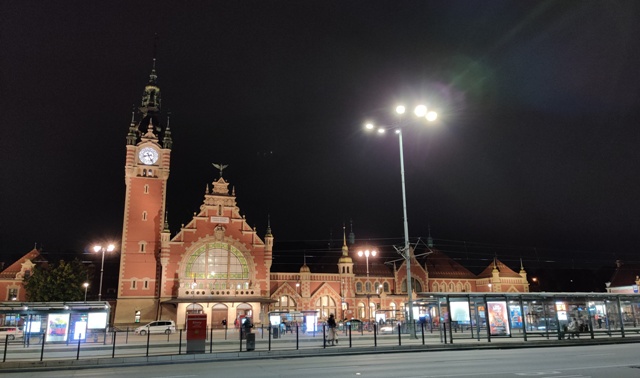
A night view of Główny Station.
What is the beach in Gdańsk like?
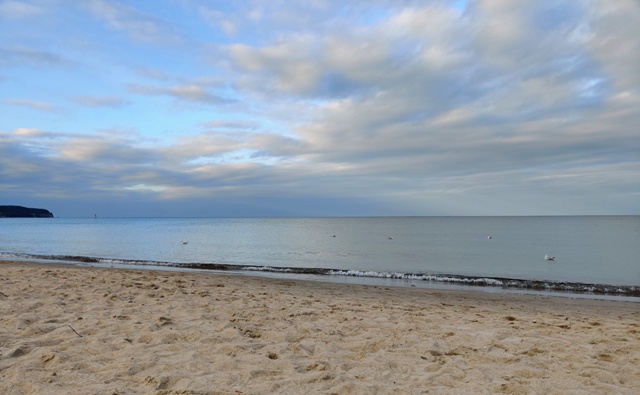
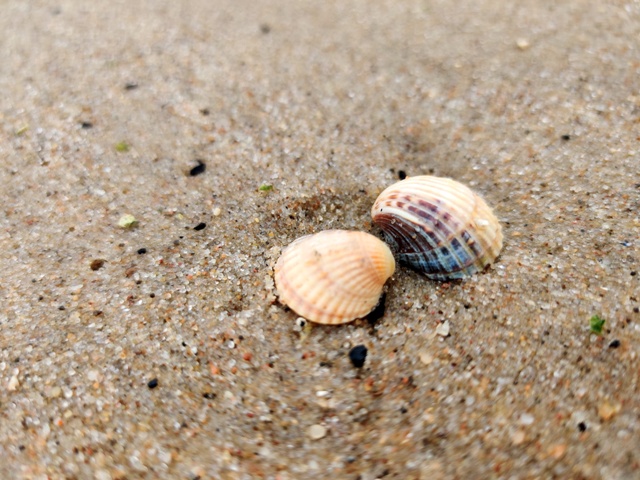
I took tram number 3 from the Główny train station to Gdańsk’s Brzeźno Beach. It was a long, lovely sandy beach; although the weather was on the cool side, I still managed to dip my feet in the sea in September. Since the climate was similar to Estonia’s, the bikini I had brought along didn’t get any actual use – I had been a bit too optimistic about the weather. However, I liked the Gdańsk beach even more than the one in Sopot because there were fewer people and the atmosphere was much more relaxed. The beach gave me a really good feeling, and in my opinion, even the dogs there seemed happier than in Sopot. Friends told me you can find amber on this beach, though I didn’t spot anything other than seashells.
I’ll talk about Sopot soon in my next post.