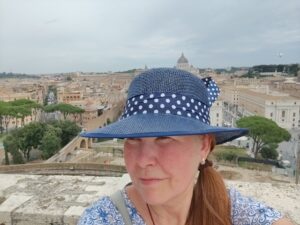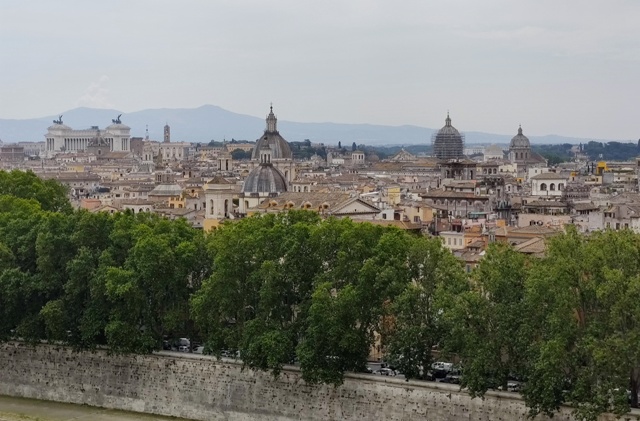
Rome actually exceeded my expectations and became one of my favorite major cities — right up there with Porto. Yes, there were tons of tourists there. Sometimes it felt as if the whole world had decided to crowd into the same street on the very same day. Yet Rome didn’t strike me like many big cities, where the sights are isolated islands in the middle of endless concrete. In Rome, the entire city itself is a sight to behold.
Walking down the street, I saw buildings that seemed to have at least a couple of centuries’ worth of fascinating stories to tell. There were so many churches, fountains, sculptures, and historic buildings all around. Yes, everything there was old, beautiful, and likely more significant than it appeared.
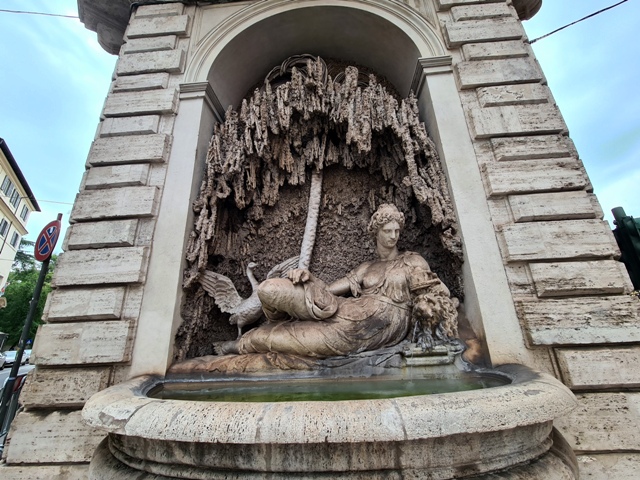
Rome’s summer heat isn’t just an urban legend
Rome’s weather can get scorching hot on a summer day. So hot that the sun doesn’t just shine down from above, but seems to be walking right beside you. The possibility of a heatstroke seemed entirely realistic. Fortunately, there were shaded streets, churches, cafés, and shops everywhere where I could duck in from time to time and bring my body temperature back down to a human-friendly level. That’s why my sightseeing proceeded at a rather slow pace. To be honest, I’m not sure exactly what I saw. Rome is the kind of city where you can just walk endlessly and wait for it to truly reveal itself.
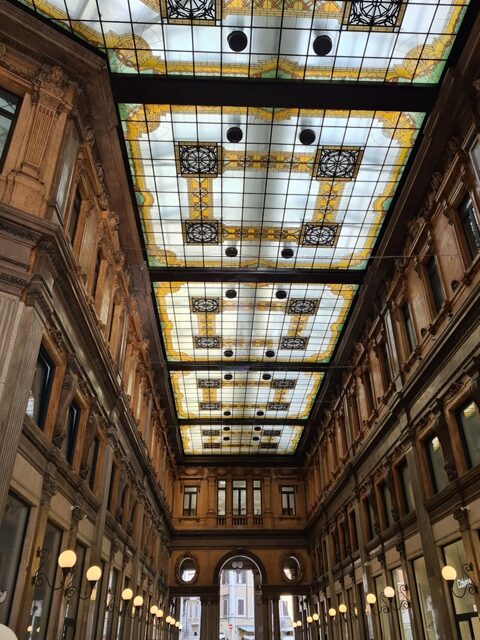
If you prefer skiing to sunbathing, and don’t need that constant feeling of being right next to each other, you probably shouldn’t go to Rome in the height of summer. At that time, tourists from all over the world arrive to enjoy the warm weather — which was already at least 32 degrees in May — and stand in lines at the sights. You definitely need very comfortable shoes, a hat, and drinking water when walking around Rome. A walk through the city of Rome is like a proper hike.
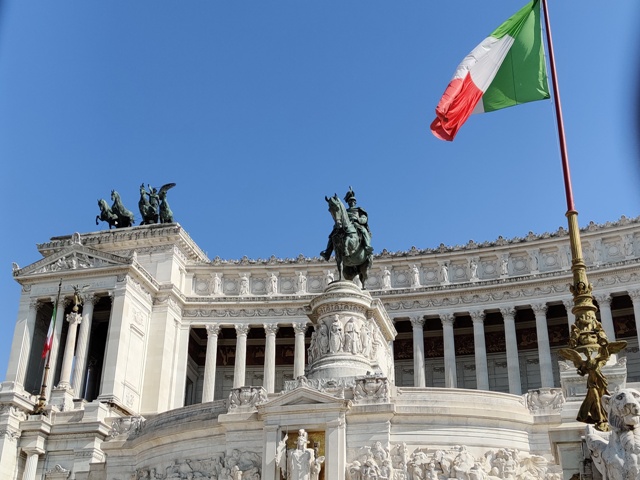
I discovered pretty quickly that I need to take Rome in small doses, much like a very strong espresso. A little bit gives you energy and inspiration, but too much at once can make your head spin. That’s why I was very happy every evening when I could take the train back to Anzio and wash away the day’s city bustle in the waters of the Tyrrhenian Sea.
Must-see sights…
I had to find Via de Campo Carleo, because a magnificent view was supposed to open up from there. After passing through the iron gate, the view of the Forum opened up, and I was able to photograph the ruins of the ancient world…
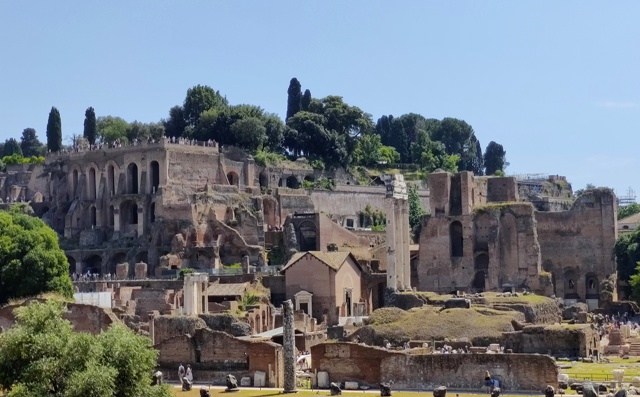
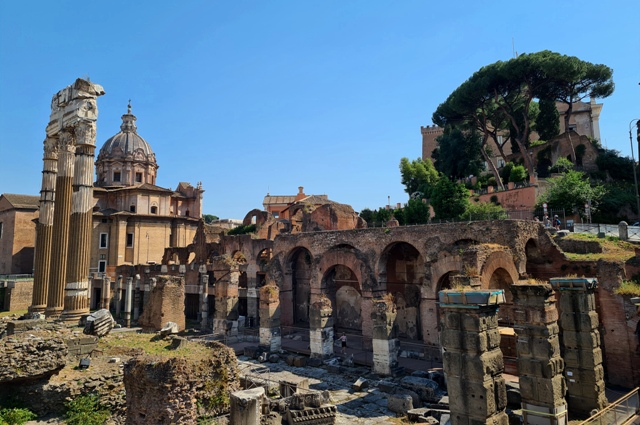
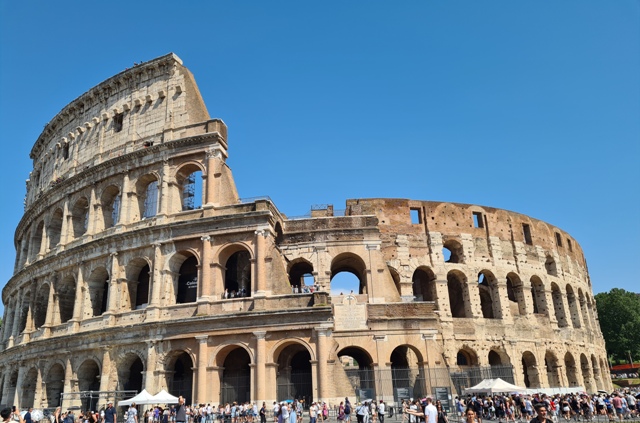
From there, I could drift along with the waves of the huge crowd toward the crumbling Colosseum.
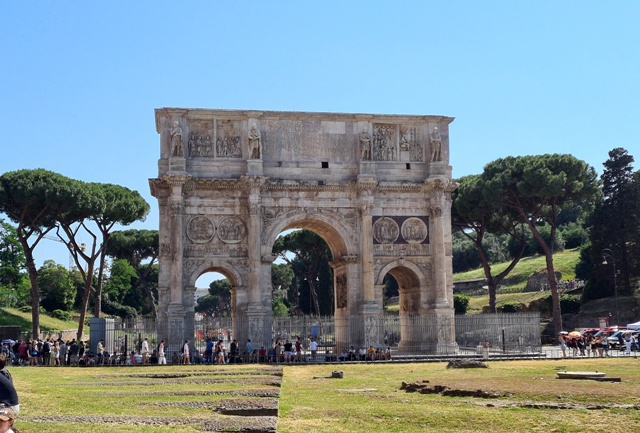
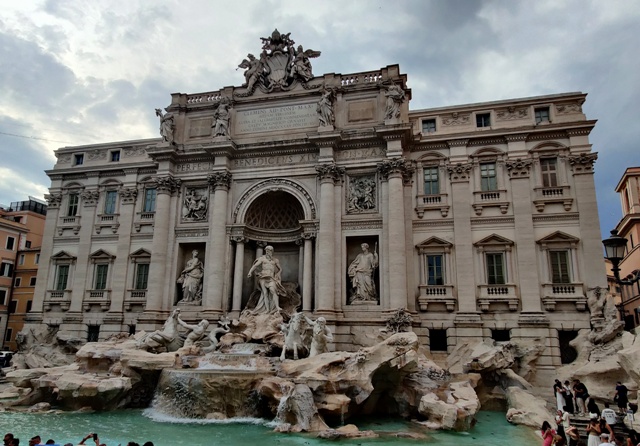
And then on toward the Centro Storico, where it was supposed to be fun to walk around. And, of course, the famous Trevi Fountain, around which a large crowd had gathered.
What you need to know before you decide to take the subway
I decided to take the subway from Termini Station toward the Vatican. The subway trains must have been in a bad mood that day, because even though I tried to jump into the subway car quickly, and the car wasn’t full, I was squeezed between the doors so that one foot was inside the car and the other on the platform. The other passengers pulled me back onto the platform through the doors, and the train sped away. The next train also slammed its doors shut quickly and sped off, leaving some members of groups of friends or families behind. And the train was half-empty. But would anyone in Estonia have come to pull me out from between the doors, or would they have just laughed maliciously from a distance?
So I recommend agreeing on which stop you plan to reach, so that if part of your travel group happens to get left behind, you don’t have to shout through a closed door and hope that the others on the platform can hear you. For this reason, you should also be extremely careful on the subway when traveling with children.
Oh, that famous Vatican!
Vatican City is the world’s smallest independent state, but its influence is anything but small. It is a place where the area is tiny, but the significance is immense. The first thing that greets visitors there is St. Peter’s Square. It felt as if I had stepped into a vast, quietly unfolding performance whose rules people don’t fully understand.
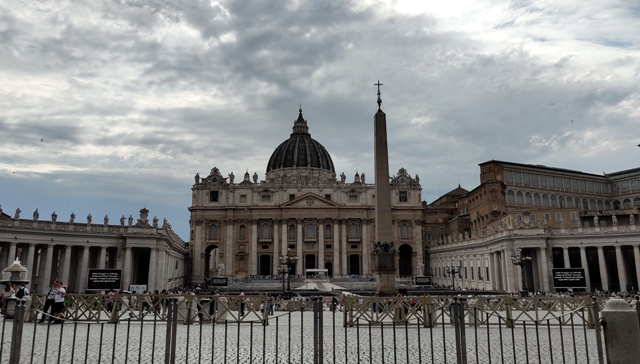
What is interesting about the Vatican is that its world has been shaped not only by construction, but also by collecting. Among other things, the Vatican is one of the world’s largest art and history museums. And a large part of this collection has ended up there thanks to the popes, who over the centuries have been surprisingly passionate… art collectors.
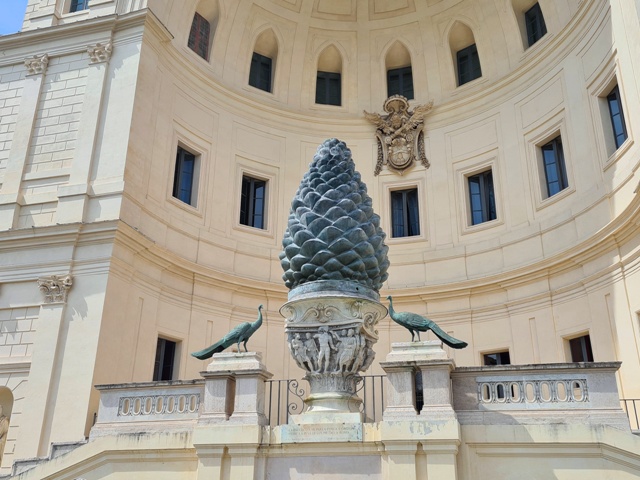
A rotating bronze sculpture. A sphere within a sphere.
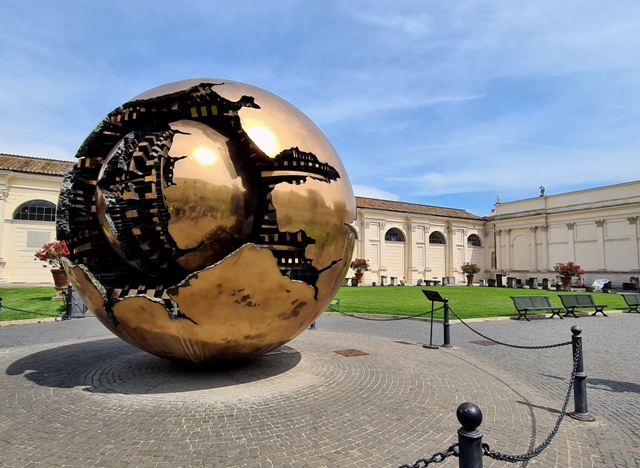
Around and inside St. Peter’s Basilica, there are countless sculptures, paintings, and architectural details dating back to both ancient Rome and later centuries. The popes have deliberately brought the artistic heritage of ancient Rome to the Vatican. In a sense, a great relocation of art took place there. So ancient Rome hasn’t disappeared; it has simply moved to a new location. The Vatican is also a place where the world’s memory is preserved.
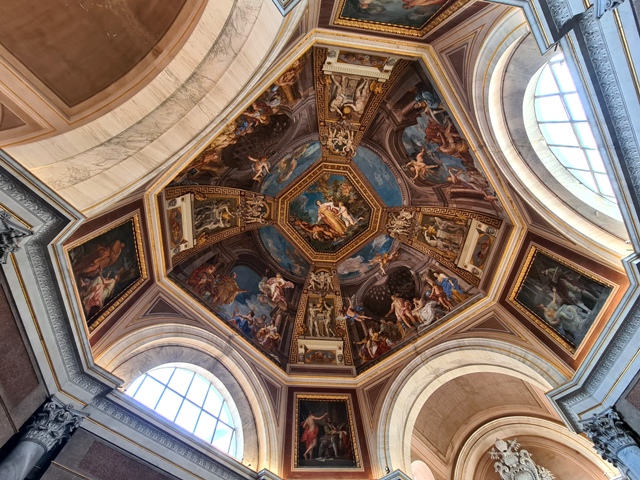
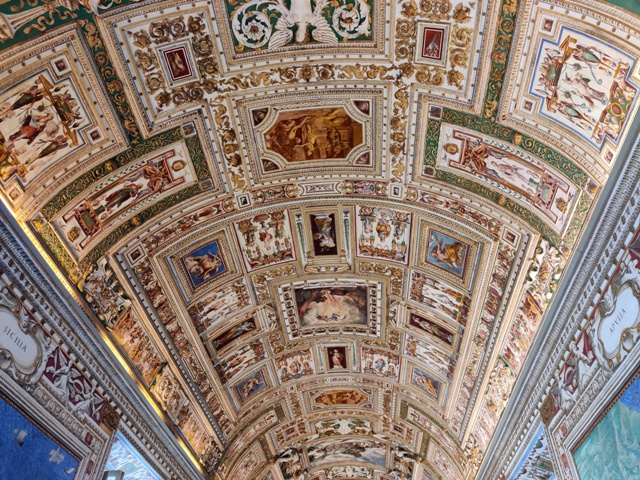
A ticket to the Vatican Museums isn’t very expensive in itself, but even a few days in advance, tickets are likely no longer available, and at best, you can buy a guided tour, which was about as expensive as my flight ticket to Rome.
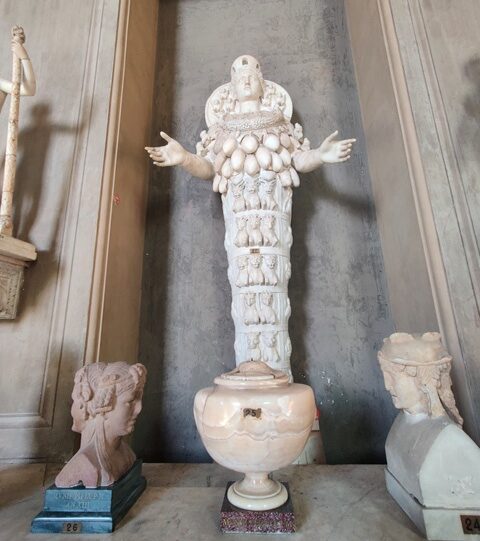
However, the most interesting cultural heritage of ancient Rome lies on multiple levels underground, where I was unfortunately not allowed to go — and what a loss that I can’t tell you about it. Guides should definitely steer bloggers toward the more exciting sights, so we don’t end up writing yet another Wikipedia-style article…
The Sistine Chapel is not just a museum
The ceiling and walls of the Sistine Chapel are covered with frescoes that depict stories from the Bible and the history of the papacy. The most famous part is the ceiling, painted by Michelangelo. The ceiling is not just a ceiling, but a narrative. The walls are not just walls, but history. The most famous scene there is the Creation of Adam, that famous near-moment where two hands almost touch.
The Sistine Chapel also serves a very practical and important purpose: it is where the College of Cardinals gathers to elect a new pope. When the doors close, the outside world disappears for them for a while. Once a decision has been made, the famous white smoke rises from the chimney.
The magnificent and golden Basilica di San Pietro in Vaticano
St. Peter’s Basilica, with its golden splendor and grandeur, left a truly breathtaking impression. The ceiling is so high that your thoughts feel a little smaller halfway up. The basilica also houses one of the world’s most famous sculptures, Michelangelo’s Pietà. It is one of those moments when art feels more like a memory of something very old and very quiet. And somewhere deep within the basilica, it is said that St. Peter’s tomb is located.
St. Peter’s Basilica, with its dome, seems to be a world of its own, one that has nevertheless chosen to coexist peacefully with Rome.
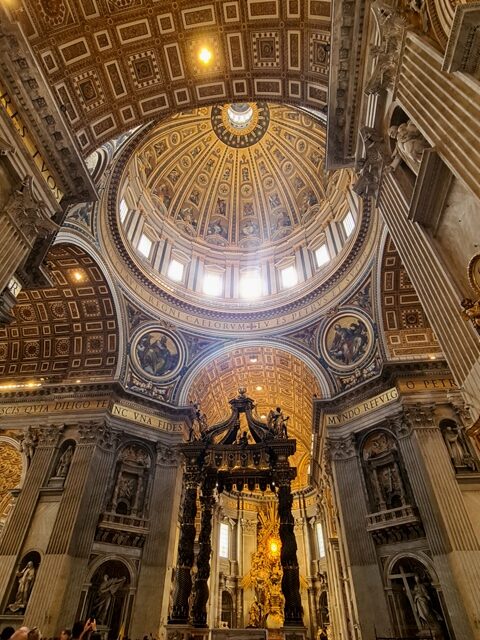
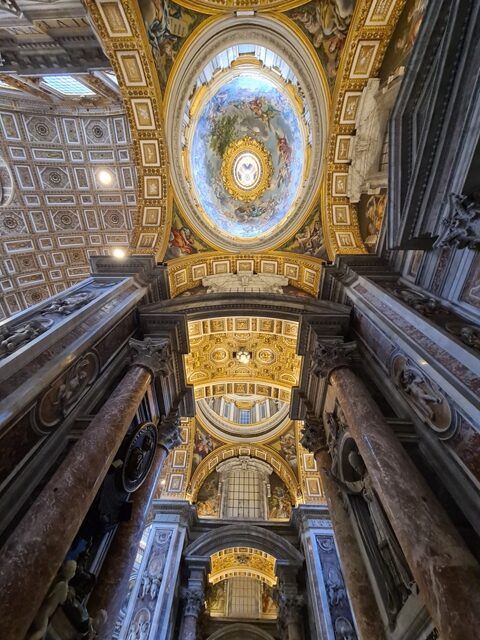
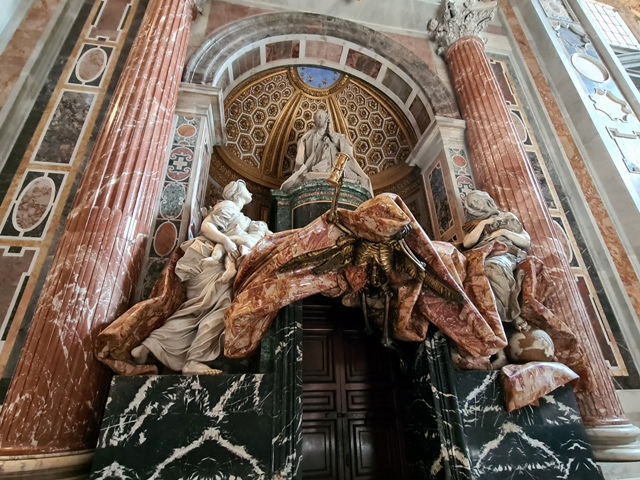
When I finally stepped back onto Italian soil from the Vatican, the sun was shining again in my eyes and the noise of Rome’s streets returns. But for a moment, I had been in a place where Time flowed more slowly and its story was far more complex.
Castel Sant’Angelo, a fortress with very thick walls
Castel Sant’Angelo is located near the Vatican and, from the outside, looks like a large round fortress that has decided straight lines are overrated. A secret passage runs from there straight toward the Vatican, and it is said to have been the popes’ escape route. Inside the fortress are narrow corridors, old staircases, and rooms that remind you that the fortress has never had just one purpose. The walls seem to whisper of different eras.
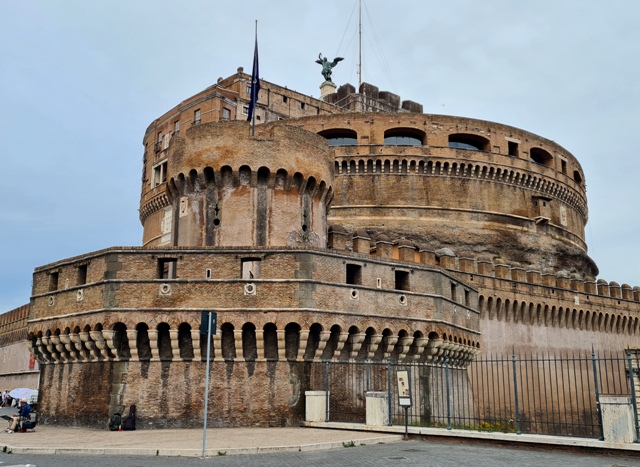
From the roof, the view of Rome reveals the city not as chaos, but rather as a very old and very layered story that has not yet ended. The Tiber River winds as a peaceful line far below.
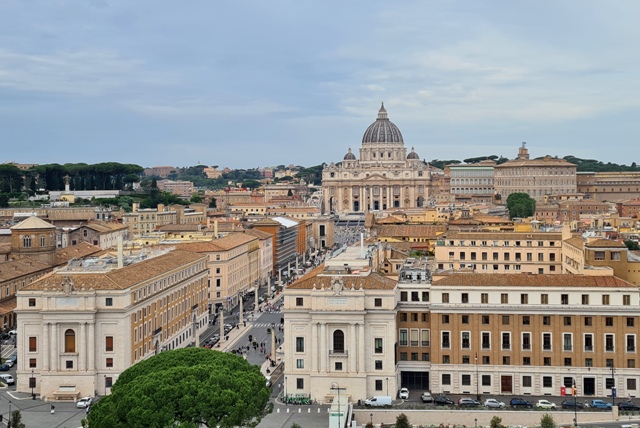
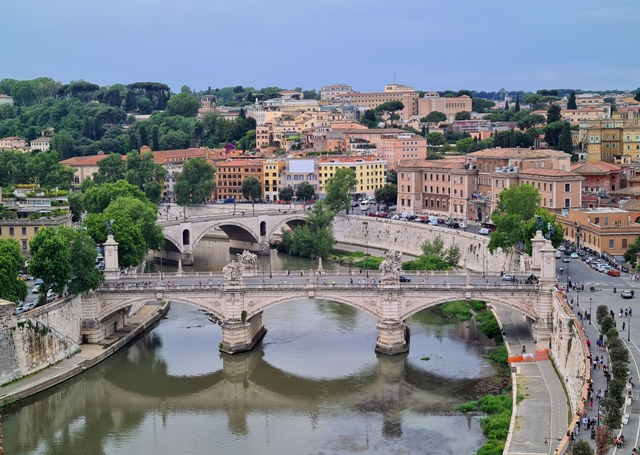
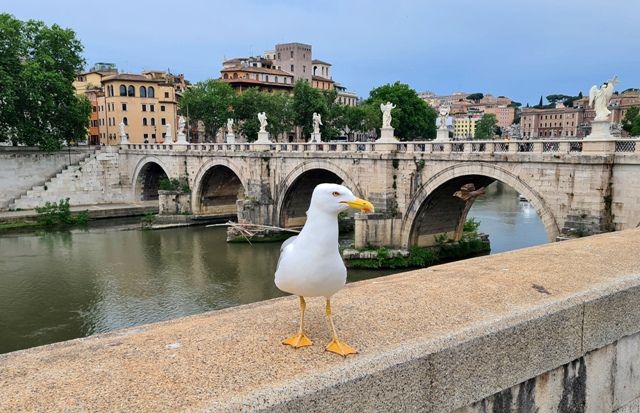
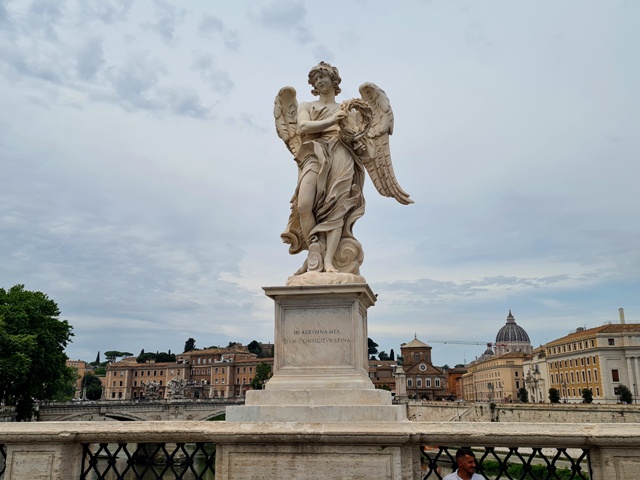
The bridge in front of Castel Sant’Angelo is the famous Bridge of Angels, or Ponte Sant’Angelo
Even if your only goal is to reach the other side, this bridge compels you at some point to slow down and look around. The bridge itself is said to have been originally built in ancient times during the reign of Emperor Hadrian. Over time, the bridge has been repaired and rebuilt numerous times. What makes the bridge special are the angels. A row of white angel sculptures stands along the edges of the bridge, said to have been added in the 17th century. The Tiber River flows slowly beneath the bridge.
The Pantheon is stunning, authentic, and magnificent
The Pantheon was the most magnificent thing I saw in Rome. The Pantheon is one of those rare buildings that is not ruins in the classical sense. It is rather an ancient, yet very much alive, moment in history. The Pantheon’s dome is a testament to the ingenuity of ancient engineers. At its center is an opening called the oculus. The question of how and from what this dome was built would likely give modern engineers quite a headache.
Since the oculus is the only source of light in the Pantheon, the light there is always changing. Sunlight moves slowly along the walls, as if someone were turning a large invisible clock. Time itself seems to behave a little more politely inside the building than outside. The Pantheon is a place in the heart of Rome where Time becomes timeless, and I found myself wondering what it would feel like to float steadily upward, out of the dome, and whether other beings might also float downward from there, into the midst of people. Allegedly, the Pantheon was, so to speak, a temple to all the gods. Some questions, however, were never meant to have answers.
This is a building that has outlived most empires, and for just as long, rain has poured in through the oculus, transforming the atmosphere into something mystical, and flowed away from the floor.
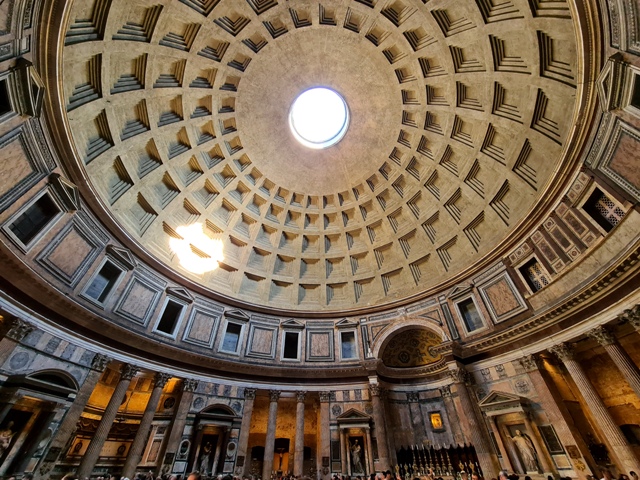
I really enjoyed being in the Pantheon. I felt that it was something truly authentic and magnificent. When I stepped out of the Pantheon again, the streets of Rome seemed somehow too ordinary for a moment. Too noisy and too hurried. As if someone had pulled me out of the flow of time for a moment and then carefully placed me back.
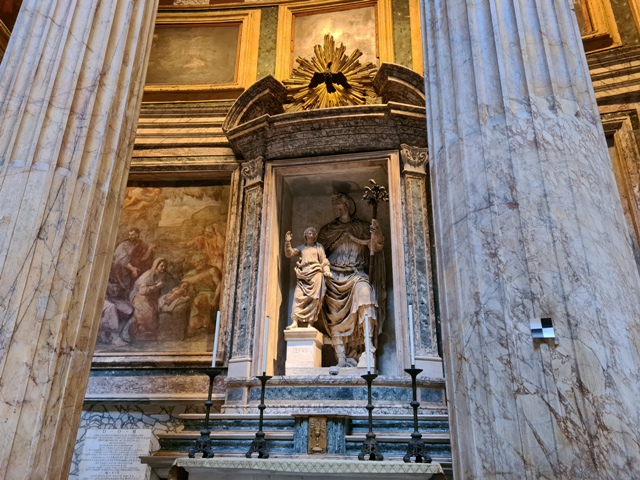
An important part of travel is memorable coincidences
Italy also offered quite a few coincidences again. For example, I have a warm feeling about a tiny boutique that sold silk scarves. I happened to notice it just as I was thinking that I should buy a silk scarf as a gift before leaving Rome. The shopkeeper mentioned, among other things, that Rome has changed a great deal over the past 20 years; the artisans who used to sell their crafts next to her boutique have disappeared and been replaced by sellers of so-called mass-produced souvenirs. I also asked the saleswoman about the scarf — whether it contained polyester or not — and confirmed that it was indeed mulberry silk. Such positive emotions continue to nourish the soul long after the trip has ended.
Can you spend the night at Fiumicino Airport?
Whether it’s convenient to spend the night at one airport or another is also an interesting topic. If your flight leaves very early in the morning and the prices of hotels near the airport are as high as they are in Fiumicino, it’s entirely possible to find a chair at the airport where you can nap for a few hours, read a book, or write a blog post. Fortunately, I had already passed through ticket control that evening and made it to the travel terminal, which had soft chairs — though the armrests had been designed to make them as uncomfortable as possible. It was still possible to doze off, though. And there’s usually not much time until morning.
Time tells its own story — and in a different way in every era
Rome turned out to be much more exciting than I could have imagined. At every turn, there is a statue, a fountain, a beautiful building, or simply a little corner that seemed to have decided to remain part of the story of Time. The city itself was like an endless open-air museum, where the exhibits weren’t behind glass but lived out their completely ordinary daily lives.
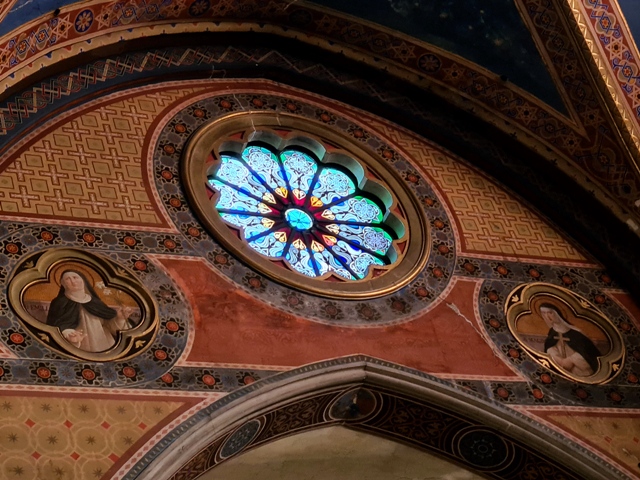
At the same time, it’s a little sad to think about how much of that ancient culture has been lost or changed over time. Time has been quite a creative author in Rome. It has rewritten its own story, layered it with new strata, and erased details so that no one can say for certain how things actually were.
But even within these ancient walls, it is possible to sense something. If you slow down for a moment and listen, it’s as if a very ancient voice echoes through the stones, or rather, a sense that something great once existed here.
When I think of Italy, however, what stays closest to my heart is the warm-hearted interaction between people. People write the most colorful chapters in each other’s life stories. And the color with which these stories are written depends on the encounter and the moment.
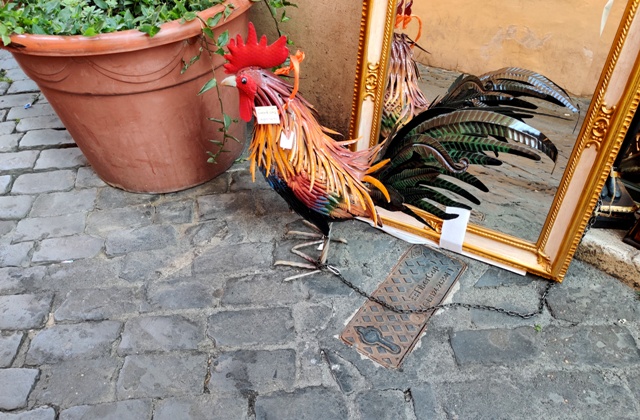
Among other things, I’ll miss the 32-degree heat in Rome. For some reason, I don’t believe the Estonian weather can achieve anything like that. Eeven if it tries its hardest on a few rare summer days.
You can find the first part of the travelogue here:
Why go to Fiumicino Airport, and what is Anzio?